JDR Hawkins

One bullet can make a man a hero… or a casualty.

It’s a Winner!

Image

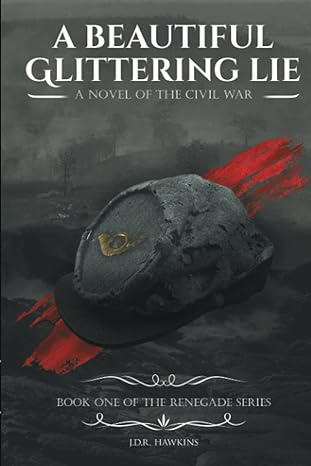
I would like to announce that my novel, A Beautiful Glittering Lie, has just been chosen to receive the 2013 John Esten Cooke Fiction Award! This award is given by the Military Order of the Stars and Bars. It is a very distinguished honor, and only one book is chosen annually. 

To receive this prestigious award is like a dream come true for me. I can’t express how grateful I am to the Literary Committee for bestowing this honor upon me. I’d like to extend my sincere thanks for choosing my novel for this award.

And thank you very much, everyone, for believing in my book. I couldn’t have done it without all of your support and guidance.

Another Excellent Review

I just wanted to share with you a very nice review I received from a reviewer for my novel, A Beautiful Glittering Lie. Here is an excerpt:
 
“In a nation divided into two due to different ideologies and political thought, the common man is forced to take sides and fight a battle which becomes his own. The American Civil war was one such event in History. When the North fought the South, Hiram, a farmer in Alabama, chose to enlist and was assigned to the newly constituted 4th Alabama Infantry of the Confederate Army.
 
“The Novel plots his travails on the battlefield and of his family bearing his absence. His son David is unwillingly left behind and tries to find adventure nearer home and risks his life by repeatedly visiting Huntsville, which has been invaded by the Yankees, with his friend Jake Kimball. Caroline, Hiram’s wife and his daughters wait for him. They try to live a normal life and take care of their farm helped and protected by David, now the “Man” in the family. Does Hiram come back? Will David become responsible? It will be a startling discovery for the reader and a very intriguing read all the way to the end.
 
“The work provides a proud revelation of the gallant effort of the 4th Alabama, relating true incidents from the recordings of Mr. R.T Cole, a soldier in the volunteer Infantry. The realistic portrayal of unflinching patriotism and chivalry of the soldiers, their camaraderie and friendship is touching and awe-inspiring. At the same time it is like watching the war from close quarters and it makes one realise the futility of it when every loss of life brings grief.
 
“When Hiram realises the meaninglessness of war, the reader empathises with him. It portrays how in times of strife families are torn apart and their lives are changed forever, notwithstanding the reasons and justifications of war. How the youth have to grow up suddenly when they are forced to take the places of their fathers and their innocence and exuberance is smothered in the aftermath, hits home after reading the story.
 
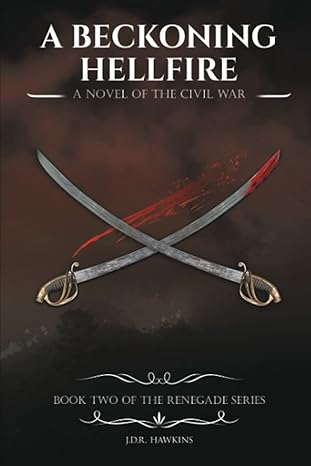
“The novel is presented as a prequel to the author’s first novel “A Beckoning Hellfire”. For someone who has not read it yet, it will be a very interesting story after the prequel. For someone who has read it will be still more interesting to know what lead to it all.”

 You can read the entire review at:

http://zealotreaders.blogspot.in/2013/05/a-beautiful-glittering-lie-by-jdr.html

Restored Confederate Murals Reveal Long-Lost Secrets

A project that has been underway since last June has uncovered new details that haven’t been seen in decades. The Virginia Historical Society is in the process of restoring four large murals by artist Charles Hoffbauer (1875-1957), which depict the rise and fall of the Confederacy, and are entitled “Spring,” “Summer,” “Autumn,” and “Winter.” Hoffbauer began work on the murals in 1913 and completed them in 1920. They have been on display since 1921.

The restoration project will cost $870,000. The sum of $375,000 in grant money was awarded by the National Park Service, the National Endowment for the Arts, and the National Endowment for the Humanities. The VHS must nearly match the funds, and is in the process of acquiring the funds.

In order to clean the murals, several layers of varnish that had been applied over the years have had to be removed, and an acrylic varnish, which should last over 100 years without yellowing the murals, will be applied. The cleaning has revealed several things that were hidden by dirt, including the bright purple color of A.P. Hill’s sash. Other elements that has been hidden for years is the existence of two wounded Confederate soldiers in the Spring mural, and a dead Yankee soldier in the Autumn mural.

E. Lee Shepard, VHS Vice President for Collections and Sallie and William B. Thalhimer III, Senior Archivist says the mural collection celebrates the Southern soldier and sailor. “The emphasis is on the valor of the Southern soldier,” he notes.

The murals are on display while restoration work is in progress, and can be seen at the VHS, which is open Monday through Saturday from 10 a.m. to 5 p.m., and from 1 to 5 p.m. on Sunday. Admission is free.

For information call (804) 358-4901 or visit www.vahistorical.org/hoffbauer

Additional information about the project can be found at: http://www.civilwarnews.com/archive/articles/2013/may/hoffbauer-0513.htm

Recovering Civil War Flags

It is common knowledge that many flags were captured during the War Between the States, with Union soldiers capturing Confederate flags during certain battles and vice versa. Most would assume that after the war ended, the flags were returned to their rightful owners. This was the intention at the turn of the twentieth century, and laws were enacted to ensure that captured flags would be returned. However, over the years, certain flags fell between the cracks and were never returned, even though the states in possession of them were required to do so.

One such example is a flag that resides in the basement of the State Capitol Building in Des Moines, Iowa. After participating in a reenactment in Mason City last year, we were told by the Confederate camp that the state had a Rebel flag in its possession. After researching and contacting local historians, we found the rumor to be true. However, Iowa refuses to return the flag because it is a tourist attraction for the state.

The flag was captured at Gettysburg, and rightfully belongs to the Mississippi 17th. It is in dire need of repair, so it sits boxed up in the dark cellar of the Capitol Building, waiting for attention. Estimated repair costs range from $5-10,000. The Sons of Confederate Veterans are willing to save up for repairs, but they are having difficulty obtaining the flag. 

There are other such cases as well. In the process of investigating the Iowa flag, we learned that there are two in Ohio that belong to the Confederacy. Southern states are reluctant to pursue the issue, as it will undoubtedly be a costly venture, and political ambition always seems to prevail. One can only hope that, perhaps someday, the flags will be returned to their rightful places.

Confederates Under Attack (Again)!


Believe it or not, a recent petition was filed to remove the impression of three famous Confederate generals off the face of Stone Mountain in Georgia. This carving, a well known, famous landmark in Georgia, is the largest bas relief sculpture in the world, and its history is rich. The man who was initially commissioned to do the carving of Confederate President Jefferson Davis, General Robert E. Lee, and General Stonewall Jackson, was Gutzon Borglum, who abandoned the project in 1925. He later began work on Mount Rushmore. The project was taken over by several other sculptors until its completion in 1972.


According to Sons of Confederate Veterans #1452 newsletter, a petition has been filed online by McCartney Forde, who considers the sculpture to be offensive, as well as a continued honor given to Confederate leaders as an affront to those their government kept in slavery.

“It’s almost like a black eye or an embarrassing smudge on our culture,” McCartney Forde told 11Alive News. “My efforts aren’t to just destroy something, ’cause I understand that does mean something to some people,” he said. “But there should be some room for compromise and there should be something up there that we all could be proud of,” he added.

With only 35 signatures supporting his petition thus far, Forde admits the response to his drive to wipe Stone Mountain clean has been overwhelmingly negative.

What’s In a Name?

Apparently, the city of Memphis, Tennessee is about to succeed in changing the names of three Confederate themed parks. According to a recent issue of the Sons of Confederate Veterans #1452 newsletter, the newly designated “Parks Renaming Committee” has decided that Forrest Park (named after Confederate General Nathan Bedford Forrest) will be renamed “Civil War Memorial Park.” I guess this is better than what they had originally wanted to rename it, which was “Health Sciences Park.” The City Council has agreed to leave the graves of Forrest, his wife, and his grandson, as well as the statue of Forrest on his steed, in the park. Jefferson Davis Park will soon become “Harbor Park,” instead of the original idea of renaming it “Mississippi River Park,” and Confederate Park will be renamed “Promenade Park” instead of the original name change suggestion of “Memphis Park.” The city might even go as far as to post signs in the parks in regard to the history surrounding them.

“I think it allows the city to heal a little bit,” Councilman Harold Collins said. “Everybody gets a little what they want.”

“Renaming these parks has no purpose,” Citizens to Save Our Parks President Mark Buchanan said. “It doesn’t solve anything in the city. Crime is still in the city. Taxes are still high.”

Another idea that failed was renaming a park after Civil Rights leader Maxine Smith. Pastor Keith Norman made a motion to rename JeffersonDavisPark after her, but in a 7 to 1 vote the motion failed.

Mayor A C Wharton said that he wanted one of the parks to be named after Smith. “If it’s necessary, I’ll just go ahead and do it on my own,” he said. “I feel that strongly about it.”

The park names debate now heads back to City Council, but no date has been set as to when Council members will meet on this issue.

Civil War Songs

I recently had the honor of giving a presentation about Civil War music. This is always fun, as most everyone has heard of at least one song presented. I received the greatest participation when I started singing “Dixie,” (of course!) otherwise known as “Dixie’s Land.”

The list of songs created during the War Between the States is almost endless. As Ken Burns said in his documentary, “it was a singing war.” On many occasions, the Confederates and Yankees would find themselves camped on opposite sides of a river, where they would exchange songs. Inevitably, the bantering led to “Home Sweet Home.” When the song ended, quiet remorse followed.

The Civil War spawned such great songwriters and composers as Stephen Foster, (“Camptown Races,” “Beautiful Dreamer,” “Genie With the Light Brown Hair,” and “Oh! Susanna,”) as well as Henry Clay Work and Daniel Emmett. Songs ranged from patriotic compositions to marching songs, melodies about political figures to spirituals. Music was an important release for soldiers, who carried along their harmonicas, banjos, drums, jaw harps, guitars, and violins. Many made their own instruments out of bones, cigar boxes, tree branches, or whatever else they could find. Songs were sometimes taken from old traditional melodies, and several variations of a song were frequently invented with new lyrics written for whatever occasion presented itself.

Hollywood Forever Confederates

Image

During a recent trip to southern California, I visited the Hollywood Forever Cemetery (formerly Hollywood Memorial Park Cemetery) in Los Angeles. This is a very fascinating place, as are all cemeteries for historical authors such as myself, because it’s amazing what you can learn about people by reading their headstones. Anyway, while touring the grounds, I discovered several Confederate graves.

The cemetery is unique in that it was founded in 1899. Many famous celebrities are buried there, including Charlie Chaplin, Rudolph Valentino, Bugsy Siegel, John Huston, Jane Mansfield, Johnny Ramon of the Ramones, Peter Lorre, and Mel Blanc, the famous voice of Bugs Bunny and other Warner Brothers characters. The cemetery backs to the Paramount Studios lot. Paramount purchased 40 acres with RKO by 1920.

The cemetery nearly went bankrupt, but in 1998, all 62 acres were purchased for $375,000, refurbished, and renamed “Hollywood Forever.” Besides celebrities, an entire section is dedicated to Jewish people, as well as to the aforementioned Confederate veterans. This section is impressively quite large, proving that, after the War Between the States ended, many Civil War veterans migrated to California.

Mississippi Will Soon Be Represented at Shiloh

For quite some time, local camps of the Mississippi Sons of Confederate Veterans have been pursuing a very special project. It seems that every state that participated in the Battle of Shiloh has a monument, except for Mississippi. I’m not sure why it has taken this long to get the funds together, but I’m guessing it is because, after the Civil War ended, Reconstruction took hold and the state was so poverty-stricken that it couldn’t afford to pay for a monument.

However, that is going to change in the very near future. The state has agreed to match funds contributed by Mississippi SCV camps for the project. The following is a letter from the Mississippi SCV Commander, Alan Palmer.

“It gives me great pleasure to announce the passing of the Shiloh Monument Bill to fund the 250,000 dollars for the construction of the Shiloh Monument. The bill will be signed by the Governor by the 22nd of this month and it is worth noting the bill passed without a single nay vote. This is a major accomplishment for the continued efforts of the SCV and others who wish to remember and honor our ancestors.”There are many people who deserve recognition for this accomplishment but three deserve special mention. Buddy Ellis who started the SCV efforts in getting us all on-board at a time when it seemed economically impossible, and Greg Stewart who was instrumental in laying the groundwork and or lighting fires under the right people to proceed with this important legislation, and non SCV member Kimble Johnson who is the chair of the Mississippi Monuments Commission. As you know we cannot put so much as a single brick up at Shiloh, it has to come from the state and Kimble Johnson in that since is the state representative. The good news is he and we want the same thing and we will have a monument that will surpass all other monuments now at Shiloh, something we can all be proud of and that will honor our boys in the way they deserve after all these years.

“The total cost is expected to exceed $425,000 and of course that could go higher and probably will, the good news is with the $250,000 from the state we will begin the project with a little over $420,000 once the money is deposited into the Archives account in July. We still need to keep up our fund raising efforts to offset any additional costs that will come up, because they will come up and we don’t want to have to scale back for lack of funds. Every penny raised for the Shiloh Monument will go for the Shiloh Monuments construction, placement, and upkeep.

“We have developed a close working relationship with Kimble Johnson that we must maintain in order to have an important part in seeing this project through to completion. I spent two hours on the phone with Kim Friday night and we are on the same page and he has given us a most important task in the design of the monument to make sure it is a historically accurate representation of Mississippi troops. He also agrees that while the monument will represent the 6th Mississippi with larger than life Bronze figures ,all Mississippi units must be listed on the monument that were at Shiloh.

“As you know we also were trying to get legislation through that would provide state monies to help us restore and preserve those sacred Battle Flags that we have worked so hard on. I am sorry to say the bill died in committee, however, the bill did not die because of the provision to provide money for flag restoration and so we plan to present it again in the next legislative session with high hopes of getting it through. I mentioned a few weeks ago that several of us met with Lt. Gov Tate Reeves and he is very much in favor of restoring the flags and will be an ally in our future efforts. Along those lines and in speaking with Greg Stewart last night I think we should formulate a new permanent legislative committee to work with legislators in pursuing our goals. My thoughts for making this a permanent committee is that you cannot change committee members every two years when a new commander takes over because it takes time to establish relationships with the powers that be and an entirely new committee every two years would be ineffective at best. That being said, the committee would answer to the commander and division as we all do and a member could resign or be voted off the committee if the need arose by the EC and a new member appointed.  After seeing what can be accomplished I think this could be an extremely important committee in promoting and or defending our heritage as we move forward. Many of you have taken the lead on your own and achieved great success in the past but we need a concentrated full time effort in place and with that there is no telling what we could accomplish.

“God Bless the Mississippi Division and grant us continued success.”

This is exciting news, and well overdue. Best of luck in achieving your goal.

(Special thanks to Clay Pruett for sending me this article.)

Slave Haven

A fascinating relic from the War Between the States still exists in downtown Memphis. Known as Slave Haven, or the Burkle Estate, the small white clapboard house (built between 1849 and 1856) on 826 N. 2nd Street is believed to have been a way station of the Underground Railroad. The house was built by Jacob Burkle, a German immigrant, who also assisted slaves to their freedom by hiding them in a cellar until they could escape north through tunnels leading to the Mississippi River. Slaves then obtained passage on boats traveling up to the Ohio River.


There are four underground tunnels in Memphis that were major arteries of the Underground Railroad. The house is marked by two large magnolia trees that were a signal to slaves because of their evergreen leaves. The house is furnished with Victorian furniture, and one room displays quilts that were used by slaves as maps to their freedom. In 1978, the family revealed that the Burkle Estate had been part of Underground Railroad, and the house was opened as museum in 1997.

Post Navigation

Follow

Get every new post delivered to your Inbox.

Join 33 other followers